Showing posts with label Travel. Show all posts

Wednesday, February 20, 2008

A slice of Europe in South America

As the plane touched down in Ministro Pistarini International Airport in Buenos Aires, the sun gave me a warm welcome. Landing as I was from the cold climes of a New York winter, I felt its rays wrap themselves around my shoulders like a well-worn shawl and invisibly snuggled up to them. The highway leading from the airport to the city centre was wide and lined with rolling hillocks on either side. Against the bright blue of the sun-drenched sky, the greenery reminded me of parts of Europe. That image soon faded without warning and gave way to worn apartment blocks that clustered together and were so reminiscent of Mumbai that I began to wonder what exactly Buenos Aires really was about.

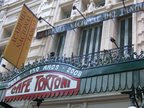
Later, walking through its enchanting neighbourhoods, I encountered more than just the odd backpacker trying to figure their way around like me, map firmly in hand. I already felt comfortable. I began my exploring with the Plaza de Mayo (pronounced ‘masho’, for those unfamiliar with the Spanish language), the seat of the country’s revolution against Spain in May 1810, as well as mass demonstrations organized by Eva Peron and the trade union movement in 1945 that sought to bring Juan Domingo Peron to power. The Plaza also witnessed riots as recently as 2001 when Argentina was crippled by its now infamous economic crisis. Uniformed policemen permanently patrol the Casa Rosada (literally, ‘Pink House’), home of the executive branch of the federal government and the most impressive building in the vicinity - though to be fair, the headquarters of the National Bank, the May Pyramid and the Metropolitan Cathedral of Buenos Aires, all a stone’s throw away, are also worth your time. The plaza is the culmination of Avenue de Mayo, whose tree-lined pavements shade numerous Art Nouveau buildings that led, in 1997, to the avenue’s declaration as a national historic site. One of these buildings is CafĂ© Tortoni, a charming coffee house and a Buenos Aires landmark – queues to enter are a common sight at all hours of the day, and, conversely, spending a few leisurely hours inside is a must-do activity for all visitors - one that I made sure I didn’t miss myself!

Ambling along Avenue 9 de Julio, named so after Argentina’s Independence Day, I tried to recall any other avenue I’d seen that was as wide. The best I could dredge up from memory was Paris’ Champs Elysees, but even that was not as wide as the Avenue of the 9th of July. Maybe there is some truth, after all, to its claims of being the biggest avenue in the world. I passed by the Obelisk, a huge monument in the middle of the avenue built in 1936 to commemorate the 400th anniversary of the city, and very reminiscent of the other, probably more famous Obelisk at the Place de la Concorde in Paris.
Disappointment was probably writ large on my face, however, when halfway along the seemingly never-ending avenue I walked up to the steps of the Teatro Colon, one of the world’s largest opera houses, only to be told that it had been closed for renovation since 2006, and was slated to take a while more to complete. Well, you can’t have EVERYTHING, I suppose! I was enjoying Buenos Aires so much at this point that I shrugged it off, disappointed as I was, and continued my urban adventure. This took me to Rivadavia and the Plaza de los dos Congresos, where I sat for a while in the park and admired the imposing National Congress building and the many statues of famous Argentinian citizens that dotted the plaza.

Buenos Aires is reputed to be one of the best cities in the world to party, and for a reason. The earliest people start going out, even for dinner, is around 10 PM – we left a restaurant at 12 midnight and it was more packed than it was when we entered a couple of hours prior to that. Relaxed and easygoing seemed to be the keywords – you are expected to take your time sipping your wine before placing your order for dinner, and then enjoy a cheerful conversation with your friends (if you can hear them over the din!) before you finally see your food. And the food – ah – it would be unfair not to recommend the popular Asado, basically cuts of meat cooked over a grill or parrilla (pronounced ‘parisha’), that is the traditional dish of the country. Puerto Madero, a locality that used to be a storage area along the docks but is now a modern hotspot with excellent restaurants and cafes along its marina, is one of the best places to catch a bite to eat. I didn’t get to go to a club, but heard that they stay open till early in the morning, and drinks (and everything else in Buenos Aires, for that matter!) are extremely reasonable because of the peso’s exchange rate – a few years ago it was 1:1 to the dollar but it is now 3.15.

A trip to Buenos Aires would be incomplete without a visit to Recoleta, an area that is home to the Recoleta Cemetery, where the most famous personalities of Argentina (including Eva Peron) have their final resting place, and the Basilica Nuestra Senora del Pilar, a charming whitewashed church that seemed to almost gleam in the heat of the sun. I also walked cross-town to La Boca, the neighbourhood that houses the Boca Juniors stadium, well worth a visit for all football fans – this was Maradona’s home ground. The charming locality of San Telmo was enroute, where the weekend flea market is a lovely place to shop for gifts.

Remnants of the Argentinan economic crisis are still visible – some commercial areas of the city like Florida (many streets are named after other countries and some after American states) have shops that are technically open 24 hours, but a grill outside with a small window at the side are all that indicate any willingness to do business after 8 PM or so. Local friends also recommended that it is best not to walk about with jewellery – the only kind I saw on others was beaded stuff, so I adhered to that myself.

Nevertheless, as I was boarding my flight back to New York, I overheard a young man talking to his companion in the airport. He ended up staying more than his intended few days because, in his words, he ‘fell in love with Buenos Aires’. With its cobbled streets, historical aura and vibrant nightlife, it is easy to see why.

Friday, August 24, 2007

What Happened To Us?

Dan Perjovschi, Bucharest-based contemporary artist, concludes his first site-specific installation in the United States at the Museum of Modern Art in New York this weekend. I've been to see it a couple of times. On one level, as the husband will insist on saying, it is just a series of random cartoonish scribblings, the kind you or me used to do on the last page of our notebooks in school. Well, maybe not me, but my more artistic friends probably did! Anyway, it is a satiric reflection of American society, and even more generally modern society today, and some of his cartoons are amusingly profound. You can see a printable version of the installation here, (seriously, go through it and tell me what you think!) and watch Perjovschi as he installed it in MoMA and explained his work here:

Tuesday, March 20, 2007

All that glitters is gold

I had a rather 'rich' morning viewing tons and tons of gold bars in a vault...it's true, really! OK, it wasn't like I came into some super inheritance or anything, before anyone gets any ideas!! I went on a tour of the Federal Reserve Bank of New York. I'd recommend it for 3 reasons - it's short, it's interesting, and it's not on your usual tourist list of 'Things I must do/see in New York'. It's free, and all you need to do is reserve a place in advance.

While you wait for the tour to start, there's a very detailed collection of monetary coins and notes of the world, dating back to the days of the barter system, courtesy the American Numismatic Society. Of special note is the 1933 Double Eagle coin, which is basically a gold coin which has a value of US$20, but was sold at an auction for US$ 7.59 million!!! It has an interesting history which I'm not going to get into right now, but I wholeheartedly suggest glancing at it - HERE!

The vault of course is the most attractive part of the tour, and it does not disappoint. The Federal Bank of New York essentially holds gold bars belonging to about 36 foreign governments, central banks and international organizations - only about 5% of U.S gold reserves are actually held here, the majority being in Fort Knox. The vault rests on the rock bottom of Manhattan Island and is 50 feet below sea level. The door to the vault (there is only one), which was installed in 1914 and has not been changed since (except for regular maintenance), consists of a 90-ton steel cylinder which is rotated 90 degrees to achieve airtight and watertight sealing. It is completely manual, which means that even if the electricity were to go off, it would not hamper the security of the bars. I went through this door and while I was there, a bank official was showing some other officials how the cylinder moved, as a result of which I got to see the entire contraption in motion - and it certainly did seem a 'masterpiece of protective engineering', as the brochure I later on read, noted. And it needs to be, with US$140 billion in gold currently being held inside!

Mostly for the entertainment of young visitors (I'm not ancient, but I mean schoolkids here!), there are a range of interactive educational games once you finish the tour, and I had a blast with them. I certainly learnt my bit about the monetary system for the day!

Friday, March 09, 2007

Art with a dash of history - The Salmagundi Art Club


The Salmagundi Art Club in New York is one of the last brownstone buildings on Fifth Avenue, and is the venue for regular exhibitions of painting, photography and sculpture by its member-artists, as well as regular classes for the public in art. It started as the New York Sketch Club in 1871 and moved to its current headquarters in 1917. The building’s history, heritage and architecture lend a fitting charm to the place of creativity that it is. It is open to the public from 1 to 5 p.m every day of the week, and admission is free. For lovers of art, I’d suggest a look.

Any guesses on the origin of the name ‘Salmagundi’? The word means ‘potpourri’ and was adopted after Washington Irving’s paper of the same name came into existence – it was intended to refer to the mix of wit and wisdom that the paper was supposed to be. Interestingly, Irving also used the term ‘Gotham’ to refer to New York City in his Salmagundi Papers in 1807, with reference to Gotham, England where wise men acted as fools in the hope that King John would change his decision to settle there and consequently burden the village with royal upkeep. And Gotham City, of course, provides the setting for a very famous comic book – no prizes for guessing which!!!

Tuesday, March 06, 2007

Grand Central Terminal

Grand Central Terminal (yes, THE Grand Central), is a beaux-arts building in the heart of New York City, and, as anyone who has seen it will probably vouch for, it is impressive from the outside. But what I found even more impressive was the inside of the building. During the days when steam locomotives chugged around the United States of America, Grand Central was essentially a rail yard. Hence the name ‘terminal’ (and not, as many people believe, ‘station’). Interesting note: in the olden days, ‘stations’ in America denoted post offices and not, as they are now commonly perceived, railway stations!

The inside of Grand Central is an example of architecture in its true sense. As our extremely well-informed guide informed us, architecture has to do with people and spaces, and the Grand Central Terminal reflects exactly that. It is designed to inspire awe. It is designed to enable people-watching during those long waits for trains, with plenty of comfortable spaces, railings and balconies at different levels. It is designed so that people who run to catch their trains have enough space to dash so that they do not bump into other commuters. In fact, each slab of stone on the floor of the building is exactly the length and width of a human-being – a wonderful example of the involvement of the building with the people it was constructed for, and the stairs are built with the human body in mind as well – each step has been built so that a person can walk down the stairs without even requiring to look down, because it is exactly the height and length of a normal human step.

I spent a very interesting afternoon walking around Grand Central. Truly an afternoon well spent – away from the cold!

Friday, November 10, 2006

Impressions of Frankfurt Airport

Well, hello again my dear reader, from Frankfurt airport this time - my fifth visit to this airport this year. Thanks to the fact that security checks took all of two minutes as opposed to the two HOURS that they took last time and were also intimated to us passengers by the landing crew to take this time, I am, as you can see, left with a bit of time on my hands before I board my next flight. I'm not complaining though, because guess what I got to do in my spare time here - eat strawberry cheesecake ice-cream from Haagen-Dazs, my favourite! Yeah, I still think most people would certify me crazy for deriving such orgasmic pleasure out of such a simple thing. I even lurked about cautiously with the ice-cream in my hands, half-afraid someone would be able to read my mind and learn how insanely happy I was. This was the first time I was tasting that divine taste since my time in London in 2003, and boy, did I savour every lick of it!

And guess what I saw on sale at an electronics shop in the duty-free area a while ago - frikkin' PORN! I kid you not. I always knew Amsterdam was liberal but I didn't think Frankfurt was a place where you'd see porn in the airport. Ha ha.

Frankfurt airport is also smoky. I've been here many times before but this time the smell of smoke was the first thing that assailed my senses when I entered the terminal. I prefer airports like Tokyo to this - at least they have dedicated smoking rooms where all the smokers can go and inhale their self-created fresh air (as one of my smoke-addict colleagues puts it!!). I mean..I'm fine with smoking as long as it is in an open area. I'm also fine with smoke if its in pubs or clubs (I know pubs are closed spaces, but I think it's the logic of a pub/club being created for people to drink and smoke and generally have a good time, and I'm certainly not opposed to that). Sort of contradicts what I just said maybe, but that's just what I think and I'm a person of contradictions - so sue me!! Anyway, I'm pretty sure smoke is part of the reason why Frankfurt airport is the way it is - 'mechanical and clinical', as my friend the Raccoon opines about Frankfurt airport in HIS blog. And it's probably marble-floored for the same reason - imagine the stink if they had carpets that the smoke clung on to. Changi Airport in Singapore, in comparison, is a superb airport - carpeted all over, with designated smoking rooms and probably one of the best airports in the world.

So that's my take on Frankfurt airport for now. I've got Kiran Desai's 'The Inheritance of Loss" (yes, finally managed to buy a copy at Bangalore airport) to keep me company, and also an Indian lady I just met who seems to be in the mood for conversation and I don't want to seem rude - so I'll catch you guys later. Auf wiedersehen!

Thursday, October 05, 2006

Friday, September 22, 2006

A little bit of air on earth...


One of the things I like about this place is the air. It is pristine. It smells like sparkling white sheets in a five-star hotel bedroom. Even better than that, it smells of Nature - pine trees, bubbling water in a brook and the vast sky, overcast with rain clouds or happy sunshine. Water and the sky don't really have smells of their own, but if they did, this is what I think they would smell like. It really does add a spring to my step. Un peu d'air sur terre (as the French clothing company's tagline goes) really makes a difference, especially if it revitalises you like this.

This picture was taken in June, and its not so sunny or warm over here now, but the air is certainly as fresh!

Thursday, December 01, 2005

First impressions of Singapore

Sitting at the Bangalore international airport waiting to leave for Singapore, I noticed a man with a pink backpack on his shoulders. My first (and very short) reaction was “Pink? For a man? Ewwww!!” And then I gave a disapproving pat to myself and thought “Why is it wrong for a man to carry a pink bag? Of course it isn’t. Stereotypes!” The thing is, most people I know would think pink on a man is not masculine enough. But who put that idea into our heads anyway? Who told us pink = girl and blue = boy? I refuse to subscribe to stereotypes.

Anyway, Singapore has been good fun so far. The Singapore Tourism Board is organizing Christmas in the Tropics from November 12th 2005 to January 2nd 2006 – a festival of all things Christmassy. Every single mall in the place (and there are many) are lit up with all sorts of gorgeous decorations and lights, and apparently they are even having a competition to judge the best-decorated place. The key roads (primarily Orchard Road) look so pretty that you can’t help but feel this tingling happy sensation inside. Christmas anywhere is an experience, and with Singapore going all-out to make this Christmas one to remember for all tourists (and its own), I just have one thing to say – I’m glad I made it here at this time!

This is my first visit to Singapore and a few observations so far:

1. Every single car passenger has to wear a seatbelt (including those in the backseat – this I specially mention for the Indians who are just not used to the concept), and failure to comply with this invites a Singapore $120 fine. After living in India for so long, with all its careless and ruthless accidents that happen so unnecessarily and so regularly, I am really GLAD they have this rule.

2. Cleanliness is a habit here. At the airport, a sticker from someone’s suitcase fell off and I noticed a staff member immediately pick it up. It is so refreshing to be in a neat and clean place, qualities which are important to me personally.

3. Immigration was smooth and painless and took about one and a half minutes for me to clear. More power to the Singapore government for their tourist-friendly procedures – is the United Snakes of America listening???!! (that’s not a typo – a Canadian I met a few weeks ago told me that as a joke and then began laughing heartily when he saw I appreciated his humour!!).

4. Cosmopolitan, cosmopolitan. Though Chinese form the majority, Indians, Sri Lankans and Malays form huge chunks of the population too. And Westerners really take to this place as well because they are allowed to invest in property and the like, so a lot of them come here to retire. I don’t blame them.

5. The weather is very warm, and, (not very inventive, I know) tropical. Bangalore is damn cold compared to this!

6. I thought about it a bit and came to the conclusion that for Indians, Singapore is a place that combines the best of both worlds because it is close enough to India (for homesick desis) and yet affords the lifestyle of the West. And even East, for that matter.

Let’s see what tomorrow offers.

Monday, September 05, 2005

Rishikesh - The mystical city

Taking advantage of the fact that I am still near the hills (which, according to sources, I may not be in a while), I took off to Rishikesh last weekend. It is a very mystical place – and really like the India you read of in books, which foreigners are in constant search of (also explains why you find so many of them there). From sadhus in ochre robes to ‘holy’ cows wandering along at a relaxed pace, to the mountains nearby and most of all, the majestic gushing Ganges, Rishikesh is a place that is worth a visit.

The journey takes around six hours, and after the bus somewhat unceremoniously dropped us off at Haridwar but thankfully put us on a share-auto for the remaining leg of the journey to Rishikesh at 6 a.m, we found ourselves in the land of the pious. We crossed the imposing Ram Jhula, a huge suspension bridge which sways slowly though one steps onto it confidently thinking it is a solid structure. We made our way to the Green Hotel, a budget option for anyone wanting to visit, right at the end of a labyrinthine lane with restaurants and shops selling knick-knacks, and of course a number of temples lining the Ganga as well. Washed and ready for a day of adventure (which turned out to be more adventurous than I had bargained for!!), we proceeded to find a guide for a day’s trek to Kunjapuri, a temple of Goddess Sati (the only one in the country apparently), situated right at the top of a huge mountain. Of course, at the beginning, we thought it would be an easy walk of sorts, albeit a trifle rocky. It is a six and a half kilometer trek but after I finished it in five and a half hours, it felt like nothing less than 30 kilometres which is the actual distance if one goes up to the temple by road instead of taking the ‘short-cut’ uphill.

Two hours into the blazing heat of the day , two kilometers and many huffs and puffs later (I was still ok, which mistakenly gave me the bravado to think I could easily complete the rest of the trek), my 2 friends said they couldn’t do it and decided to return to the bottom. That left me to continue alone with the guide, a friendly and extremely trained chap who thought it would be an easy thing to complete for me. Ten minutes after I separated from my friends, the incline became much more steep and every step became a process. I had to stop and rest every few minutes. Thankfully there were a couple of fresh springs along the way with the clearest, freshest water I’ve ever sipped, and I was able to refill my bottle. Half an hour later I decided to steel myself to take breaks after every 15 minutes only and not sooner, or we would take much longer than expected to scale the top. My lower leg muscles and thighs screamed out for rest and every time I sat down on a boulder to rest, I felt like going to sleep. That couldn’t happen. I plodded on. The terrain changed from rocky mountain to forest and we didn’t see people for a couple of hours till an odd villager crossed us on his way down with some cattle. I negotiated narrow paths with tall green bushes on either side which had dubious-sounding rattles coming from them and then suddenly the land opened out into a barley field with huge stalks. I followed the guide determinedly along the cement drain path and continued climbing, past a village and school and five and a half hours later, reached the temple at the top. I stopped to catch my breath and insisted I could go no further, not even the 308 steps up to the temple. The guide however said that it made no sense for me not to go, having come all the way. So I doggedly went on, by now thoroughly exhausted and mentally dead. Physically of course, by some miracle I was still moving step by step. I prayed for a while and by the guide had come up as well. Apparently there was no taxi available at that height and we would have to trek another one and a half kilometers (downhill, thankfully) to get to the nearest bus-stop from where we could catch a bus back to Rishikesh.

I slid along the path that the guide led me on and, downhill being so much easier, reached in 25 minutes or so. Then caught the bus as it trundled up, and returned to Rishikesh, exhausted to the bone but dare I say, proud of myself.

The next day we took a bus to Shivpuri, about 14 km away. It is a rafting campsite but since the season hadn’t started, we couldn’t raft. Still, sitting by the gorgeous rushing river as the mountains loomed nearby was soul-moving, and I’m glad I could see Nature in its resplendent best. We went back half and hour later to Rishikesh and caught the bus back to Delhi.

My body still aches but that was yet another trip to remember. Awesome!

Tuesday, August 02, 2005

McLeodganj – A walk in the Tibetan woods

There comes a point in your life when you just get tired of your life being ruled by external factors – someone else’s daily schedule, or your work or concerns about what this person would think or that. Sometimes you just need a break, to be by yourself.

I took a Himachal Pradesh State Transport bus to Kangra on Friday night, and went up from there to Dharamshala and finally McLeodganj. History has it that Dharamshala so captured the imagination of the then Viceroy Lord Elgin that he wanted to make it the summer capital of India. However, fortunately for the small hill settlement, it was spared that fate – and it was Shimla which finally got that 'honour'. I can tell you that Shimla has none of the charm that Dharamshala has today, thanks to hordes of tourists and innumerable hotel constructions along the mountainside there.

McLeodganj, 10 kilometres uphill from Dharamshala, is today the abode of the Dalai Lama. Quaint and very Tibetan (though the troops of Israeli and French backpackers almost make it more foreign that Tibetan – can you imagine hotel menus in Hebrew?!), anyone who goes to the place will come back charmed. I met an Indian couple on the bus who were going to meditate in the hills there, and they were able to give me some valuable information – such as the fact that staying in McLeodganj makes much more sense than in Dharamshala because it is much more interesting with its little market lanes. I went to the Dalai Lama’s residence and walked around the Buddhist temple within (the Dalai Lama himself was away in Switzerland) on my first day there, then went to Norbulingka which is a centre for the preservation of Tibetan arts and crafts spread over a lovely campus near Sidhpur. To get there, simply take the local bus to Palampur and get off at Sidhpur (a ticket costs Rs.4), then walk the 15 minutes to Norbulingka. I spent a couple of hours in the lazy afternoon there, then went back to Dharamshala where I popped in at the Kangra Arts Museum. I suggest you give it a miss – the government enterprise is dark and gloomy. I sat on a sack of potatoes (truly an Indian experience!) during a crowded van trip back as mist began swirling around the valley, then ate Hotel Snow Lion’s famous lemon curd cake in McLeodganj as I watched the slow drizzle change to a steady downpour. Deciding that it was not going to stop for a while, I dashed to my hotel, getting thoroughly drenched in the process.

As a result of that rain soaking my running shoes, I had to traipse around Bhagsu and Dharamkot, both 2 km from McLeodganj, in – catch this – Bata slippers, the next day! It wasn’t such a bad thing as it started raining again during the day but it wasn’t so comfortable after a point! I met an Israeli girl on the way to Bhagsu (the place is known for its temple), and she accompanied me in rambling about the most wonderfully green and mysterious woods nearby. There are a number of meditation camps in Dharamkot, and during our exploring we found a stone hut which looked like it was something out of an ancient land, with a couple of French backpackers eating fruit calmly as the mist loomed up the hills yet again. We spent an hour sitting there peacefully as well.

I caught the bus for the long journey back that evening, but Monday morning and the honking of Delhi only made me wish for the peace of the hills once more.

Tuesday, July 26, 2005

The land of milk, honey and hardworking people?!

My cousin wanted to know why I hadn’t written about my first visit to the US of A last month so here I am – I can never resist the chance to needle people I think will take it sportingly :-)

So, having lived in Europe, India and the Middle East at various points of time, what do I really think about the land of milk-and-honey? I didn’t have any bad experiences that I can describe in lurid detail, much the worse for those of you who thought there was some America-bashing coming up. I didn’t even see that much of the vast country – just a bit of the West coast. But I thought it was a relief to be amidst some order and cleanliness after the chaos of life in India. I also thought that many Americans are a paranoid lot who can exude some more warmth.

I had to remove my shoes at numerous points for security checks at the airports. On the way back, I was taken out of line and had to stand in an enclosed space pod, a bit like those you see in science fiction movies, where three blasts of air whooshed around me. I asked an airport officer what that was about, and he said it was to check for drugs and explosives. It was ok, I don’t get offended very easily, but it’s scary to think what happens to people who have the tiniest bit of anything that the machine wrongly detects as harmful.

I went for a global meet where there were many non-Americans, so I can’t say I had long interactions with many Americans. Those that I did speak to were quite courteous. Not overly friendly, but nice enough. The cities I visited, Portland and San Francisco, were rather pretty. San Francisco is gorgeous, to be fair. And the day I was there the weather was awesome. The city thrives on tourists and has some spectacular views.

During the trip, my boss asked a colleague whether she would like to live abroad. She replied that while she might like to go overseas for a year or two, she’d rather be a first-class citizen in India than a second-class citizen in a country like the US. The US is a very entertaining place to visit, and I might even like to visit multiple times, but I wouldn’t want to live there. I think Europe is more friendly and cultural, and those are things that appeal to me about a place.


Thursday, April 21, 2005

Paradise on Earth


“If there is paradise on earth, it is here, it is here, it is here,” once exclaimed King Jehangir of Kashmir. The atmosphere is not as carefree as it was during his time, but I echoed his feelings when my eyes feasted upon the natural wealth of Kashmir for the first time. I was full of mixed emotions when I went – what was I to expect? The last two decades have seen Kashmir’s socio-political atmosphere disintegrate tragically, and even if one isn’t too keen on reading about the state of affairs there regularly, the Indian media won’t allow you to speculate. Bombs, suicide attacks – that’s all I ever read about. But things are improving, albeit slowly. On April 7th , the first Srinagar-Muzaffarabad bus in recent times made a journey. The happy event was however clouded by a purported ‘militant’ attack on the Tourist Reception Centre in Srinagar a day prior to that. I say ‘purported’ beause the majority of educated Kashmiris in the city believe that it was a government plan to attract attention to the terrorism in the state – security in the area prior to the bus journey was so tight that even a fly couldn’t have flown by, and then a militant attack?, they noted skeptically.

As my flight descended into the Valley, I was awestruck by the looming snow-capped mountains in the distance, and the yellow mustard fields dotting the landscape. The grey clouds in the sky seemed all at once mysterious and beautiful. Srinagar, the capital of Kashmir (or, as the BBC, politically correct as always says, ‘Indian Kashmir’) is nestled among the Karakoram range of mountains and has a population of 1.1 million. Muslims are the majority but Sikhs, despite the Anantnag massacre in 2001, still live here, as do many Hindus despite the ouster of the Kashmiri Pandit Hindus a while ago. Army men stand with guns or man bunkers on the roads every few feet, despite the relative peace in most areas where people go about their daily business, having got used to the presence of the military in the state. The supply of electricity is erratic, with regular power cuts, and life pretty much shuts down by 8 PM.

Having said all this, I don’t think I can do justice to the beauty of the place. It is no wonder that India and Pakistan are fighting over Kashmir, because I’m pretty sure that tourism alone would bring in a lot of money if there was peace. I went to Gulmarg, literally meaning ‘Meadow of Flowers’, which was actually a meadow of snow when I was there! A white blanket dotted the mountainous area, and a ride by cable-car took me to the upper reaches of the area where the base of some peaks were within walking distance. Many old Hindi films have been shot in Gulmarg, and I even recognized some locations from my limited memory of a few I’ve seen (If anyone knows the Mumtaz-Rajesh Khanna song ‘Jai Jai Shiv Shankar’, it was shot here).

Pahalgam is another pretty-as-a-picture place to visit. This one translates as ‘Valley of Shepherds’. A rushing river gushes through the region, called the Lidder Valley, as snow-laden peaks shine in the distance. It actually snowed briefly while I was there, and though summer is known as the best time to visit, the cold added its own touch to my memory of Pahalgam.

Taking a ride in a shikara on Dal Lake, getting dressed up in Kashmiri get-up for a photo and begging the army men at security check-posts at the entry to the Mughal Gardens at Cheshmashahi to let us take a video-camera (which we finally did smuggle inside!) are some other enjoyable moments of my trip.

One thought that repeatedly came to my mind during my stay was that this was truly a paradise on earth. Now if only someone could only make the region’s decision-makers and activitists understand that.

Friday, March 18, 2005

Wah Wagah

I visited the Wagah border between India and Pakistan today. I’ve wanted to for a while, and it didn’t disappoint. Located on the straight Attari Road about 30 kilometres from Amritsar, the Wagah border consists of two huge walled gates, one on either side of the evocatively green, vast farmland of the state of Punjab. But wait – a description like that is simplifying the whole experience. The energy (of full-blooded Indians, especially Punjabis), curiosity (of a host of foreigners and NRIs, and then people born curious like me), excitement (of school children herded along by protective teachers, and everyone else in general) has to be seen to be believed. The ‘event’ as I call it, starts as soon as you step out of your car, as you wait in a crowd to start walking the half-kilometre to the gate. People young and old, of all colours and sizes, try to walk fast, jog and run to make sure they get a good place to view the goings-on. I got there about half an hour early, and we were strictly made to wait by the side of the road till we were let in at about 5 p.m. Anyone who is out of line is herded back by smartly-dressed Indian soldiers, with red and gold turbans sitting majestically on their heads.

The lowering-of-flags ceremony starts at 5.30 and till then the crowd on either side (the Pakistanis have filled up their viewing arena by then as well) shouts and cheers for their respective countries. An officious-looking gentleman warned the Indian crowd not to say anything against ‘them’. The only permitted slogans, apparently, were ‘Bharat Mata ki jai’, ‘Hindustan Zindabad’ and ‘Vande Mataram’. I don’t agree with the ‘Hindustan Zindabad’ part as I believe that India comprises of much more than just Hindus, but I got caught up in the atmosphere and shouted lustily with the rest of the crowd. It reminded me of my college days, but this was much better. I had a more heightened awareness of what was happening around me – and I think time plays a part in this. I hadn’t lost any of my ‘josh’ though, thankfully!

The parade itself is quite good to watch. On the Pakistani side of the gate, I could see the Pakistani soldiers in their navy-blue Pathani salwar kurtas and turbaned heads performing the same actions as their Indian counterparts. After a few minutes of ceremonious marching, the Indian and Pakistani flags, flying high on their masts till then, crossed as they were lowered. They were then folded perfectly (the Indian flag was chakra-side-up) and carried away in a line by their soldiers.

On one hand, it was a pretty simple event, but on the other, with its open-to-public viewing policy, hearty cheering and the lowering of flags in perfect tandem, there is something intensely patriotic about the whole experience.

I made a quick stop at Attari on the way back – its just a couple of kilometers away from the border. Having grown up on a diet of Hindi movies, I wanted to see where one of Bollywood’s latest blockbusters, Yash Chopra’s Veer-Zaara (and I haven’t even watched the complete movie) was shot. Attari is a small station through which the train from India to Pakistan passes. The station was dark and sleepy, apart from a few porters and watchmen hanging around. It was quite a change from the hustle-bustle of other Indian stations. I must have looked quite silly, taking pictures on the overbridge on which Preity Zinta and Shah Rukh Khan stood in a particular scene (not that I think they are luminaries of Indian cinema or anything!), and the porters were looking at me quite amused. A typical crazy Anjali-type thing to do, but it's my life after all, and I thoroughly enjoyed the experience
!

Sunday, February 06, 2005

Oh! Calcutta


‘Oh! Calcutta’, incidentally, is the name of the restaurant I went to in Calcutta that serves authentic Bengali cuisine in the ambience of a place which aims to recapture the glory of Calcutta as it was before it became the nationalistic ‘Kolkata’. Well-preserved old books by Jawaharlal Nehru and Tolstoy, among others, line wooden bookshelves, and a painting of devotees on the banks of the Hooghly near the famous Kali Mandir dominates a wall.

What, after all, is a trip to Bengal without savouring its culinary delights? I sampled ‘Machcher Jhol’ – anyone who knows anything about Bengalis will know about their love for fish, and this is one of the best fish curries of the region. I must also mention ‘Aloo Jhinger Poshto’, a dish made of potato, capsicum and poppy seeds which could quite potentially make one an addict, just like the opium that the poppy seeds come from!


As for dessert, well, ‘rossogollas’, anyone? That’s always been my favourite Indian sweet and the succulent sponginess of the ones in Calcutta are without comparison.


If you ask me, the true spirit of urban India is in its bylanes. It was at one such corner stand that I tasted jhaal muri for the first time. It is very similar to Mumbai’s bhelpuri but a drier, spicier version. Smacking my lips, I grinned to myself as I watched Calcutta go by busily.


Sunday, January 23, 2005

Mussoorie - Truly lording it over the plains

Outlook Traveller's Weekend Breaks from Delhi has a caption below the word 'Mussoorie' - 'Lording it over the plains'. That it truly does. Home to Ruskin Bond, Mussoorie is one of the more picturesque hill-stations I have come across. I stopped at the locally revered Shiva temple on the winding road uphill from Dehradun, which has a steady stream of devotees. I'm sure there are those who go there for the free hot tea and sweets (given as 'prasad') and for the magnificent view as well. As you proceed towards Mussoorie, the change in the temperature is noticeable - a much cooler breeze hits your face as the road curves upwards. But I couldn't have asked for a better day - the contrast of lush green hills against an azure blue sky with cotton clouds floating above is really poetic and will inspire even the most barren heart.

Snowfall the previous day had brought down temperatures and a proposed visit to the nearby Kempty Falls had to be shelved because at a certain point, there were a few well-intentioned men who took upon themselves the responsibility of warning approaching ignorants that if they proceeded any further by vehicle, they would slip and slide. So I got off and started walking, but after slipping and sliding considerably on the snow and ice-covered road, I beat a hasty retreat. Some brave people tried to overcome nature (2 groups in cars and 2 on motorcycles) but they met with an even worse experience. It was even amusing, the way these vehicles would stubbornly go the opposite direction the steering wheel was trying to get them to move in!

Jaipur - An Everlasting Memory of Times Bygone

I would recommend that everyone visit Jaipur at least once in their lifetime - the splendour of the past has been captured and packaged in a way that makes you cherish your experience forever. It helped that I stayed at the Bissau Palace, once home to nobility, now partly a heritage hotel, where 'comfort curls like a cat around your feet'.

What the authors of a piece on Jaipur have to say sums up best the reason why Jaipur is so special - 'Apathy is a logocal impossibility in Sawai Jai Singh's capital'. Popularly known as India's Pink City, the story goes that in the 1970's, the ruling king had all the buildings painted pink in honour of a visit by the Prince of Wales. The Old City houses some specimens of architectural wonder, like the City Palace, the Jantar Mantar and Hawa Mahal. But the main reason anyone should visit Jaipur is to see the forts - the Amber Fort ('Amber' in English, 'Amer' in local language) and the Jaigarh and Nahargarh Forts. Regally constructed atop a hill, the Amber Fort was home to the kings and queens of Amber. It is huge, rambling, dark and mysterious in some parts, open and horticulturally happy in others. The Jaigarh Fort was built primarily as a defence structure, and houses the country's (can't remember if it is also the world's) largest cannon. The Nahargarh Fort was built by a king for his nine wives, and has nine identical sections. Both provide awe-inspiring views of the Aravallis and the surrounding countryside.

Johori Bazar has streets lined with shops where you can get practically everything you would want to in Jaipur. I'd recommend the traditional Rajasthani 'bandhej' sarees.

After one quick visit, I feel I could go back for more. The city is full of tourists, primarily from France, the UK, Belgium and America, who wander happily around, and I'm sure they feel the same way.

Wednesday, January 19, 2005

Dehradun

I can see the mountains in the far distance from my hotel window. On the train journey here, I saw a bubbling brook which brought an unbidden smile to my lips.

Known for the Indian Military Academy and some of the country's most famous schools (The Doon School and Welham's), Dehradun is a hill-station that is slowly losing its calm due to the bane of the modern world - commercialisation. But 10 minutes away from the commercial artery of Rajpur Road, the true spirit of Dehradun can be felt. A Tibetan temple and monastery and a Sai Baba temple sit peacefully next to each other in Rajpur, and the verdant greenery lining the hills opposite provide a serenity that has to be experienced to be believed.

Friday, November 26, 2004

Oy Punjabi!

I just got back to Delhi from a trip to Punjab – my first trip to Punjab - Chandigarh and Jalandhar, to be precise. And I thought my semi-adventures were worth writing about, so I started this blog. Hopefully more will follow, at reasonably regular intervals.

I went to New Delhi Railway Station on Monday morning to get a ticket for that evening’s Shatabdi Express to Chandigarh. After a short wait at a reservation counter that happened to be for current booking ‘from 2 hours to 5 minutes before the departure of the train’, I was directed to the main reservation area, followed by a fellow traveller who had had the same query as me and was therefore directed to follow me. I WAS wondering actually, how on earth a city like New Delhi, the country’s capital and second-largest populated city after Mumbai, had hardly any crowd in the reservation area. Why, I’d seen bigger queues at Madras and Coimbatore!! My surprise, of course, turned out to be short-lived because at the main reservation area there were enough people to make up for the earlier anti-climax. It was an air-conditioned hall and people were standing in orderly lines. Being a female (which has its advantages, especially in a country like India), I got to stand in the much shorter ladies queue, and was (of course) ‘requested’ by that ‘fellow traveller’ to book his ticket as well. Apparently if he waited his time out in the queue, he wouldn’t have got any tickets for his train that evening. Being the soft-hearted fool that I am, I agreed to help him out. In a few minutes, an argument erupted at the next counter between a man and the reservations clerk. It was settled soon enough. Another thing that never ceases to amuse me in railway station queues is people walking right up to the front of the line without waiting for their turn and doing a horrible job of acting like they had no idea they were supposed to wait! Tickets in order, I handed the chappie his, took mine and went on my way.

The journey was very comfortable and we were well looked after with a regular supply of food and drink. Its no wonder that that particular train had a regular clientele. Of course, your usual few foreign tourists were also on it, on their way to (where else) but Shimla (the train went up to Kalka).

Chandigarh is India’s only wholly planned city and a refreshing change from other parts of the country, as far as orderliness is concerned. The thought that popped into my mind as I went around was why all cities in India couldn’t be this planned. I answered the question myself – I suppose then India would no longer be India. Where would the hawkers go, or the bullock carts that clop along at the speed of one kilometre an hour or the cows that settle comfortably in the middle of the road as cars whiz past them?!!

Places of tourist attraction in Chandigarh include the Rock Garden and the city’s main lake. I ventured to the Rock Garden, which is a veritable maze of charming little figurines made of stones and rocks of all kinds, but also ceramic and glass pieces of many colours. I didn’t have any preconceived image in my head of what it would be like, but it was quite a treat for the first-time visitor. Except that at various points I wondered if it would ever end – it just led from one cave to another gallery to another path which would lead to another cave…..

There were also a waterfall or two, charming bridges, any number of places to rest your rapidly-tiring legs, and a number of nooks and crannies where I chanced upon more than just one love-struck couple sitting quietly or chattering animatedly. The walk culminated in a large open courtyard, with swings hanging from old arches, lined by a gallery with mirrors. If you took the long way back to the exit, you would have to walk through a few more galleries of rock-men, by the way!! A piece of advice for girls who want to venture there alone: try to avoid it unless you can find someone to go with you, and if you absolutely must go alone, stick to families walking in groups.

I took the state government Punjab Roadways bus to my next stop, Jalandhar. To those who haven’t been on one before, a word of advice: take along a cushion to sit on, or be prepared to be bounced along like a stone in a glass jar. Jalandhar is a typical Punjabi city, with none of the peace and discipline that is Chandigarh.

One of the most interesting places to visit here is Haveli, an eatery a few miles outside the main city, which according to my guide makes a profit of Rs.1 crore a month and has Ghulam Nabi Azad as a stakeholder. I was very skeptical about the authenticity of the information but in retrospect I think its actually quite possible! The place has a permanent crowd of at least 60 cars in its parking lot and is open 24 hours, something that is made possible by having politicians as a stakeholder, is what I was told ;-)

Haveli has been constructed like a typical Punjabi village. The story goes that the owner wanted authentic bricks which were hundreds of years old to build the place, and he said he would pay villagers enough to buy a new house if they would trade him the bricks used to construct their ancient houses. Whatever it is, the effect is beautiful. Realistic-looking statues of Punjabi men and women in traditional dress doing day-to-day activities were placed here and there, and I often couldn’t make out which were the statues and which were visitors! The food was typical of the state – home-made white butter with lots of small round naans, parathas and rotis and yummy vegetarian curries like paneer makhani and dal. The waiters are dressed Punjabi-style and insist on feeding you till you feel like a balloon about to burst (but a very satisfied balloon, might I add!!).

I also took it upon myself to trace a childhood friend of mine for whom I had a five-year-old address in Jalandhar. When I went to that address, I discovered, as all the heroes and heroines in Hindi movies do, that the family I was looking for no longer lived there. But I had the sense to check with the petty-shop owner just opposite (thank God for India and its sense of neighbourliness, quite different from countries like the UK or the US where days go by without even knowing if your neighbours are at home or not), and he was able to direct me to an address in the next colony, where I had a very joyful reunion with my friend’s family. My friend had got married and moved to Jamshedpur earlier this year, but it was nice to catch up with people I had known so long ago, nevertheless.

The early-morning train back to Delhi saw me sleep through most of the journey. As we approached New Delhi Railway Station, we passed by huge groups of poor people living right next to the railway tracks. From a lady sitting on a mat with her baby playing right near the passing train, to a group of men having a game of cards, the sights were unsettling to the human mind. At one point, I saw what looked like a massive garbage dump, with kids in tattered clothes and slipperless feet picking out plastic from mounds of waste as others played cricket in an abandoned station. I recalled an article I read which spoke about how the Shatabdi Express, the train I was in, pampered its moneyed travellers while the poor who travelled in sleeper-class in other trains had to put up with more than just extreme discomfort and unsanitary conditions.

I got down from the train as it stopped at the station and walked into the sunlight.